Walk into the Emergency Department (ED) lobby at San Antonio Regional Hospital on a weekday and you may notice something you won’t find at most hospitals: a staff member who isn’t there to draw blood or take vitals. She’s there to look you in the eye and ask how you’re doing.
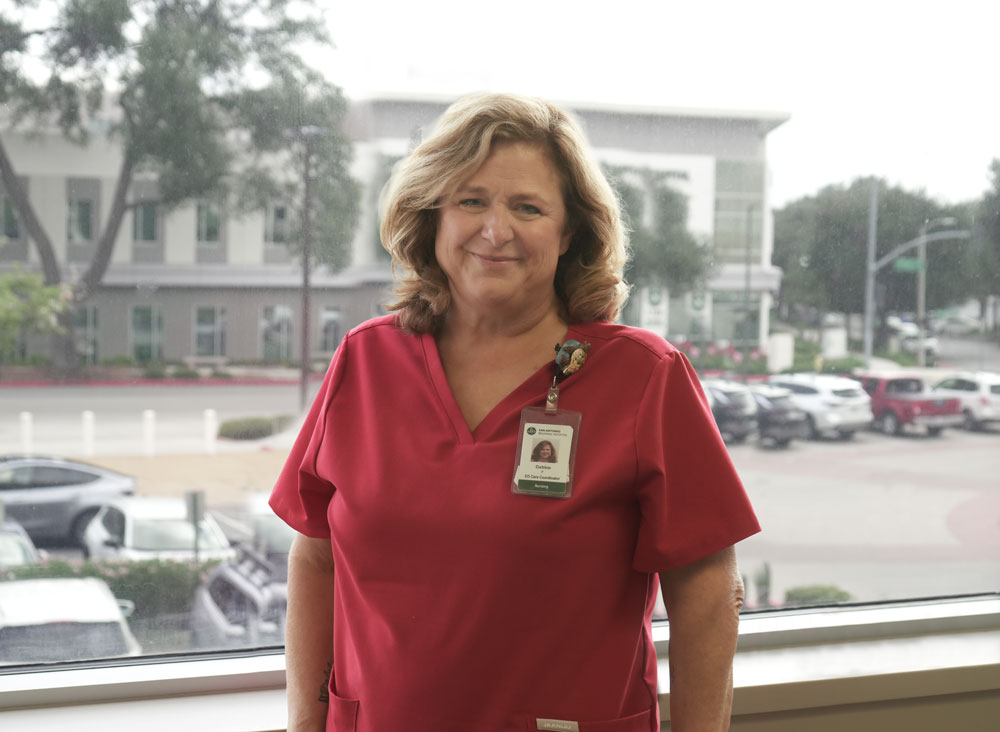
Deborah “Debbie” Philips, is the ED’s Patient Liaison, a role recently created to help patients feel informed, supported, and cared for during what can be one of the most frightening days of their lives. Debbie has worked in emergency rooms since 1998 and joined San Antonio in 2017 as a unit coordinator. After piloting a similar role at a hospital in North Carolina, she returned home and recognized how much the community could benefit from the same kind of support. She brought the idea to ED leadership, who told her, “Let’s try it.”
Today, Debbie starts her day by walking through the ED lobby, getting a sense of who is there, and identifying patients who may need extra attention or assistance. She also visits every pod in the ED, checking on those who have been waiting the longest. She pays particular attention to the treatment-and-discharge area, where patients may move between the lobby and treatment areas before heading home.
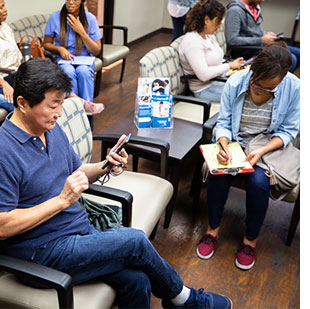
“I look every single person in the eye,” she says. “I get down on their level and try to make a connection with them.”
Those personal connections often begin with something as simple as helping patients understand what is happening around them. With more than 300 visits a day, the ED operates differently than it did even a few years ago. As Debbie explains, a patient may be seen in the lobby, have tests ordered, move to a chair to see a physician, then return to the lobby to wait for medication. For someone who visits an emergency room once a decade, that process can feel like being shuffled around and forgotten.
Debbie helps patients understand each step before it happens, offers a realistic sense of timing, and often hands them her business card so they can ask for her at any time. That communication can make all the difference in the patient experience.
“If they know that things are happening in the background, the wait becomes a little easier,” she says. “They know they weren’t forgotten.”
For Debbie, helping people in need means whatever the situation calls for. Sometimes, it’s as simple as answering a question or bringing someone a glass of water. Other times, it could be helping someone find a ride home, or supporting family members as their loved ones receive care. She recalls an elderly couple who came to the ED after the husband suffered a stroke. He had always taken care of his wife, who was understandably frightened and upset. As the medical team worked quickly to treat him, Debbie stayed by his wife’s side for nearly an hour, offering comfort and reassurance until other family members arrived.
These moments of support benefit not only patients and families, but the clinical team as well. Nurses, physicians, and security staff were a bit unsure what to make of Debbie’s new role at first. Today, they’re grateful for her assistance. With clinical staff focused on treating patients and responding to emergencies, they can’t always pause to answer every question or address every request. Debbie provides an additional resource to help fill that gap.
“Everything is hectic in the ED. Just having someone that can focus on these kinds of things gives our staff an extra tool,” Debbie says. “I am their tool.”
“Only good things have come from this,” she says. “I always tell people it’s so nice that our hospital cared enough about the community that they created a non-clinical position to provide this extra care for patients and staff.”
Ultimately, Debbie’s goal is simple. “When people leave our ED, I want to make sure they’ve have had a positive experience. I want people to think ‘those people really care about me,” — because we do.”

 Gift Giving
 Schedule Appointment



 Find a Physician
 About Us
 Careers
 Pay Your Bill
 Help Paying Your Bill
 Price Transparency
