
 Gift Giving
 Schedule Appointment


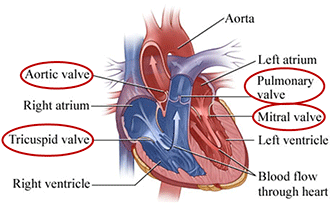
The heart has four valves: the aortic, tricuspid, pulmonary and mitral. These valves have tissue flaps, also known as leaflets, which open and close with each heartbeat. When the valves open blood flows through the heart chambers. When the valves close they prevent blood from flowing backwards.
When functioning properly blood flows one-way through your heart. It comes in through the top chamber (the left atrium) of the heart and passes down to the bottom chamber (the left ventricle) and then through your body. As blood builds in the right and left atrium, the tricuspid and mitral valves open, then quickly shut, to allow blood to flow into the ventricles. The aortic and pulmonary valves work to control the blood flow out of the ventricles into your body.
More than 5 million Americans are diagnosed every year with heart valve disease and/or heart murmurs. Heart valve disease occurs when one or more of your heart valves are not functioning properly and may disrupt the way blood flows through the heart, making the heart work harder.
The two most common types of heart valve disease are valvular regurgitation and valvular stenosis. The aortic and mitral valves are most commonly affected by heart valve disease, but any of your four valves may become diseased.
Depending on the severity of the valve problem, surgeons may need to repair or replace your heart valve.
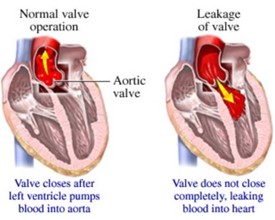
Valvular regurgitation (also known as insufficient, incompetent, or leaky valves) is the backward flow of blood in your heart which occurs when the valve no longer closes tightly. Valvular regurgitation causes the left ventricle to have to work harder which may result in a thickening of the heart muscle or a buildup of fluid in the lungs. All four valves can develop stenosis; the conditions are called tricuspid stenosis, pulmonic stenosis, mitral stenosis, or aortic stenosis.
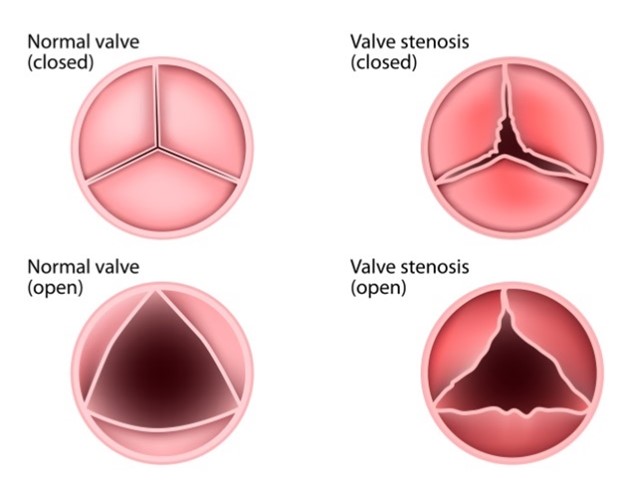
Valvular stenosis occurs when the tissue flaps (leaflets) of a valve become stiff, thicken, or fuse together. The stenosis limits or blocks blood flow through the heart. This causes the heart to have to pump harder and decreases the oxygen supply to the body. Depending on the affected valve, the condition is called tricuspid stenosis, pulmonary stenosis, mitral stenosis, or aortic stenosis.
Mitral valve prolapse (MVP) is also a common heart valve disease, affecting 1% to 2% of the population. Mitral valve prolapse (MVP) causes the leaflets of the mitral valve to flop back into the left atrium during the heart's contraction. Mitral valve prolapse (MVP) also causes the tissues of the valve to become abnormal and stretchy, causing the valve to leak. However, this heart valve disease rarely causes symptoms and usually doesn't require treatment.
Many patients in the early stages of heart valve disease do not show any problems or have any symptoms, although some do. Symptoms of heart valve disease do not always relate to the seriousness of your condition. You may have no symptoms at all and have severe valve disease, requiring prompt treatment. For these reasons, early treatment is very important. if you suspect something is wrong, make sure to discuss it with your doctor. Common signs and symptoms of heart valve disease include:
The cause of heart valve disease can be present at birth (congenital defect) or can develop over time. The causes of heart valve damage vary depending on the type of disease present and may include the following:
Other factors that have been linked to heart valve disease include:
To diagnose heart valve disease your physician will ask you questions about your signs and symptoms and will conduct a comprehensive physical examination. Your doctor may also order additional tests and procedures to learn more about how your heart is functioning and to confirm a diagnosis of heart valve disease. These tests may include the following:
There are many factors taken into consideration when determining the best treatment option for heart valve disease; some of these factors are your age, medical history, and the type and severity of the heart valve disease. The treatment options include medical management, surgical repair or surgical replacement of the valve, or transcatheter intervention (such as TAVR or MAVR).
Your doctor may prescribe medications to treat your symptoms and to lessen the chance of further valve damage. If you need valve surgery to correct your problem, some medications may be stopped after your valve surgery. Other medications may need to be taken all your life.
Ask for your doctor for information on dietary changes you should make and appropriate levels of exercise. Exercise keeps the body strong and can help reduce high cholesterol and blood pressure, which are risk factors for heart disease. Maintaining a healthy weight is also important for cardiac health. Restricting your intake of salt can often help prevent fluid retention and improve symptoms related to heart valve disease. These treatments can also lower your risk of developing a life-threatening condition, such as stroke or sudden cardiac arrest.
Although medications cannot cure heart valve disease, lifestyle changes combined with medication may treat symptoms of heart valve disease and delay the progression of these diseases for many years. Eventually, you may need more extensive care to have your faulty heart valve repaired or replaced.
 Find a Physician
 About Us
 Careers
 Pay Your Bill
 Help Paying Your Bill
 Price Transparency